From Time / מאותו הזמן

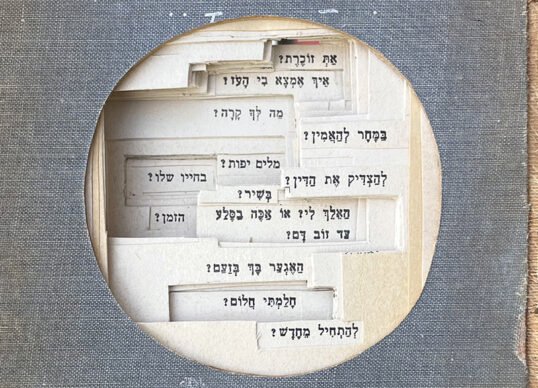
מאותו הזמן נולד מתוך ספר שירה עברית, ובו יצירות של חיים נחמן ביאליק, ש״י עגנון, רחל המשוררת ואחרים. בעזרת סכין יפני חתכתי לתוך דפי הספר, בחרתי מילים מתוך שכבות שונות של הטקסט וחיברתי אותן ליצירת שיר חדש
התהליך התחיל במילים ״מאותו הזמן״. חתכתי אותן אל תוך פני הספר, ואז שאלתי את עצמי: מאותו הזמן — מה? המילה הבאה, ״מקבלת״, הופיעה בקרבת מקום, בשכבה אחרת של הספר. מי מקבלת? הארץ. ומה מקבלת הארץ? פיוטים
מילה הובילה למילה. לא יכולתי לדמיין מראש את השיר שיתגלה. הוא נוצר בהדרגה, מתוך דיאלוג מתמשך ביני לבין הספר. עקבתי אחר המילים כפי שהופיעו, חתכתי דרך דפי הספר, עד שהגעתי למילה האחרונה, ״מים!״. באותו רגע ידעתי שהשיר הושלם
אני פסלת, לא משוררת. ובכל זאת, באמצעות פעולת החיתוך הפיזית מצאתי את עצמי מפסלת שיר מתוך מילים של כותבים אחרים. המילים כבר היו שם, נכתבו זמן רב לפני שפגשתי אותן. בבחירה ובחיבור מחדש שלהן פתחתי חלון אל הספר, וחשפתי מתוכו טקסט שלא התקיים קודם לכן
אני קוראת את השיר כמסע בזמן, אולי עד לרגע בריאת העולם. הארץ מקבלת פיוטים; השמש נעשית מורה דרך; הגשם והרוחות משקפים את תנועותיו של הדמיון היוצר. החיים פוגשים את המתים דרך המחלוקות שהותירו אחריהם — מחלוקות שממשיכות להתקיים בספרים ובחיינו. השיר מסתיים באמונה עתיקה שאינה רק פיוט, אלא מים: מקור חיים, זרם של תודעה, מעיין שאפשר לשוב ולהתחבר אליו
זוהי הקריאה שלי בשיר, אך היא אינה הקריאה היחידה. לאחר תערוכה ניגש אליי אחד המבקרים ושיתף אותי בפרשנות שונה לחלוטין. המילים שייכות לספר, אך הסידור החדש שלהן פותח מרחב למשמעויות שלא אני ולא הספר יכולנו לצפות מראש. כל קורא יכול להיכנס אל המרחב הזה ולגלות בו משהו משלו
מאותו הזמן מקבלת הארץ פיוטים
והנה
שמש – מורה דרך
גשם ורוחות לפי מצב הדמיון היוצר
והנה, בספר זה, אדם חי – דרך המתים שהניחו לו מחלוקת
ואמונתי העתיקה, לא סתם פיוט, אלא מים
!
From Time Immemorial began with a book of Hebrew poetry containing works by Haim Nahman Bialik, S. Y. Agnon, Rachel the Poet, and others. Using a sharp knife, I cut into the pages, selecting words from different layers of the book and bringing them together to form a new text. Here’s the translated text:
“From time immemorial, the earth harvests poetry
The Sun guides the way, Rain and Wind by influence of the creative imagination
It is in this book, that a person lives through the deceased who have placed for her/him controversy
And my ancient faith is not just simple poetry, it’s a stream of everflowing water!”
The process began with the words “From time immemorial.” I cut them into the surface of the book, then began to ask: from that time, what? The next word, “harvests/receives,” appeared nearby, in another layer. What receives? The land. What does the land harvest? Poems.
One word led to another. I could not have imagined the poem in advance; it emerged through an ongoing dialogue between myself and the book. I followed the words as they appeared, cutting through the pages until I reached the final word, “water!” At that moment, I knew the poem was complete.
I am a sculptor, not a poet. Yet through the physical act of cutting, I found myself sculpting a poem from the words of other writers. The words were already there, written long before I encountered them. By selecting and rearranging them, I opened a new window into the book, revealing a text that had not existed before.
I read the poem as a passage through time, perhaps reaching back to the creation of the world. The land receives poetry; the sun becomes a guide; rain and winds reflect the movements of the creative imagination. The living encounter the dead through the disagreements they have left behind, disputes that continue to inhabit our books and our lives. The poem ends with an ancient faith that is not merely poetry, but water — a source of life, a current of consciousness, a spring to which one can return.
This is my reading of the poem, but it is not the only one. After an exhibition, a viewer once shared an entirely different interpretation. The words belong to the book, but their new arrangement opens a space for meanings that neither the book nor I could have anticipated. Each reader can enter this space and discover something of their own.
View this post on Instagram