Nothingness and Me / האין ואני

האין ואני התחיל מתוך רצון פשוט: למצוא שתי מילים, ׳אין׳ ו׳אני׳, ולהביא אותן יחד
בעברית, ׳אין׳ פירושה ״כלום״ וגם ״האינסוף״, ואילו ׳אני׳ פירושה העצמי — האגו. שתי המילים מורכבות בדיוק מאותן שלוש אותיות עבריות, בסדר שונה. האחת מצביעה לעבר הריק והאינסוף, והשנייה לעבר העצמי האינדיבידואלי. נמשכתי למתח שביניהן, ולאפשרות ששני המושגים, הנראים מנוגדים זה לזה, קשורים זה בזה קשר עמוק
לקחתי ספר העוסק בתולדות הספרות העברית ועברתי עליו, תוך מיפוי כל הופעה של המילים ׳אין׳ ו׳אני׳. ציפיתי למצוא הרבה יותר מופעים של ׳אני׳, בידיעה שהספר כולל יצירות של משוררים ידועים רבים. קישרתי את המילה לאגו, לעצמי שתופס מקום ומבקש לבסס את נוכחותו. להפתעתי, גיליתי שהמילה ׳אין׳ מופיעה פי עשרה יותר מהמילה ׳אני׳
התגלית הבלתי צפויה הזאת הפכה לנקודת מוצא להתבוננות. מה אם הריק, ה׳אין׳ — ואולי האינסוף — נוכחים יותר מכפי שאנחנו מדמיינים? מה אם העצמי, שמרגיש מלא ומרכזי כל כך, הוא רק חלק אחד מתוך מציאות רחבה הרבה יותר?
לתפיסתי, ׳אני׳ ו׳אין׳ מקיימות ביניהן מתח יסודי: ה׳אני׳ סופי ומלא, ואילו ה׳אין׳ ריק ואינסופי. אולי האתגר אינו למחוק את העצמי, אלא לפנות בתוכו מקום — לאפשר לריק להיכנס, ולתת לנוכחות של משהו שמעבר לעצמי להתגלות
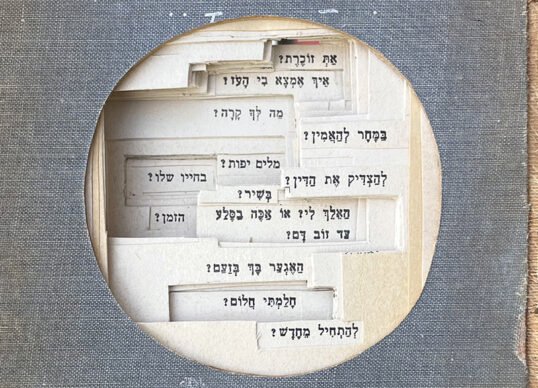
באמצעות חיתוך לתוך הספר, הבאתי את שתי המילים אל מרחב פיזי משותף. רציתי לראות אותן זו לצד זו, ולהציע אותן לצופה כשאלה פתוחה: מהו היחס בין העצמי ל׳אין׳? כמה מקום תופס ה׳אני, ומה עשוי להתאפשר כאשר הוא מפנה מקום ל׳אין׳?
לקח לי שלושה חודשים להשלים את העבודה (18 ס״מ על 28 ס״מ). בחודש הראשון קראתי את הספר כולו ומיפיתי את כל המקומות שבהם הופיעו המילים ״אין״ ו״אני״. מתחת לאנגלית נראה המיפוי שיצרתי (המספרים מציינים את העמודים שבהם הופיעו המילים):
Nothingness and Me began with a simple desire: to find two words, Ain (אין) and Ani (אני), and bring them together.
In Hebrew, Ain means both “nothingness” and “the Infinite,” while Ani means “I” — the self, the ego. The two words are made from exactly the same three Hebrew letters, arranged in a different order. One points toward the void and the Infinite; the other toward the individual self. I was drawn to the tension between them, and to the possibility that these two seemingly opposing concepts are intimately connected.
I took a book on the history of Hebrew literature and went through it, mapping every appearance of the words Ain and Ani. I expected to find many more occurrences of Ani, knowing that the book included works by many celebrated poets. I associated it with the ego, with the self that occupies space and seeks to assert its presence. Instead, I discovered that Ain appeared ten times more often than Ani.
This unexpected finding became a starting point for reflection. What if the void, the nothingness — or perhaps the Infinite — is more present than we imagine? What if the self, which feels so full and central, is only one part of a much larger reality?
In my understanding, Ani and Ain hold a fundamental tension: Ani is finite and full, while Ain is empty and infinite. Perhaps the challenge is not to erase the self, but to make room within it — to allow emptiness to enter, and to let something beyond the self become present.
By cutting into the book, I brought the two words into a shared physical space. I wanted to see them together, and to offer them to the viewer as an open question: What is the relationship between the self and nothingness? How much space does Ani occupy, and what might become possible when it makes room for Ain?
It took me 3 months to complete (size 7 x 11 inches) – the 1st month I read through the whole book and mapped out all the places where I saw the words “Ain” and “Ani”, here’s the mapping out of it (the numbers stand for the pages the words appeared on):