Quest-ion / שאלות מעוברות
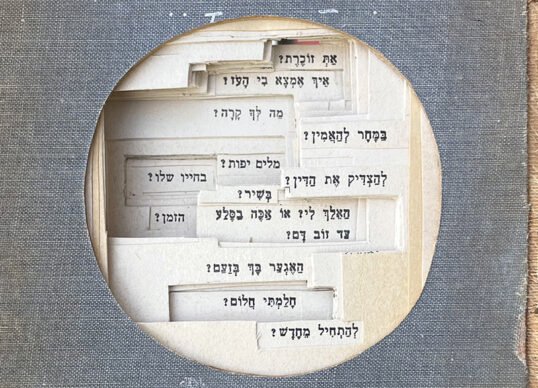
התערבות אמנותית בספר שירה של רחל בלובשטיין (גודל 13.5 ס״מ על 18 ס״מ) הידועה כרחל המשוררת, שהייתה דודתו של סבי. הקשר שלי אליה הוא, אם כן, גם אמנותי וגם משפחתי, ורציתי ליצור איתה דיאלוג על פני הזמן
כשקראתי את הספר, ריתק אותי לגלות כמה שאלות רחל שואלת בשיריה. ספרתי 83 שאלות — שאלות אינטימיות, קיומיות ואנושיות מאוד. התחלתי לחתוך בתוך הספר, לפתוח אותו פיזית סביב 14 מהשאלות האלה ולהעלות אותן אל פני השטח
הפתח העגול נעשה משמעותי עבורי. חשבתי עליו כעל רחם: מרחב שבו משהו מוחזק, מתפתח ויכול לבוא לידי קיום. רחל לא הייתה לאם, ולכן התחלתי לחשוב על הפתח הזה כעל ״רחם של שאלות״ — מקום שבו השאלות עצמן יכולות להתעבר
הדבר הוביל אותי גם לחשוב על המילה העברית רחם, ועל הרעיון של מה שנישא בתוכו — משהו שעדיין לא בא לידי קיום. אנחנו כל הזמן ״בהיריון״ עם שאלות; הן מלוות אותנו אל העתיד ומעצבות את מה שנעשה מחר. יש עבורי גם קשר פיוטי בין רחם לבין מחר, שיש להן אותיות משותפות: הרחם הוא מקום שבו משהו מן המחר נישא לקראת התהוות
העבודה היא, אם כן, שיחה בין שתי נשים המופרדות זו מזו בדורות, בין טקסט לחומר, ובין שאלות לבין מה שעשוי בסופו של דבר לצמוח מתוכן. כשאני חותכת בתוך הספר, אינני הורסת אותו אלא נכנסת לתוכו — יוצרת מרחב פיזי עבור השאלות שכבר היו בו, ומאפשרת להן להמשיך לשאול את עצמן
.
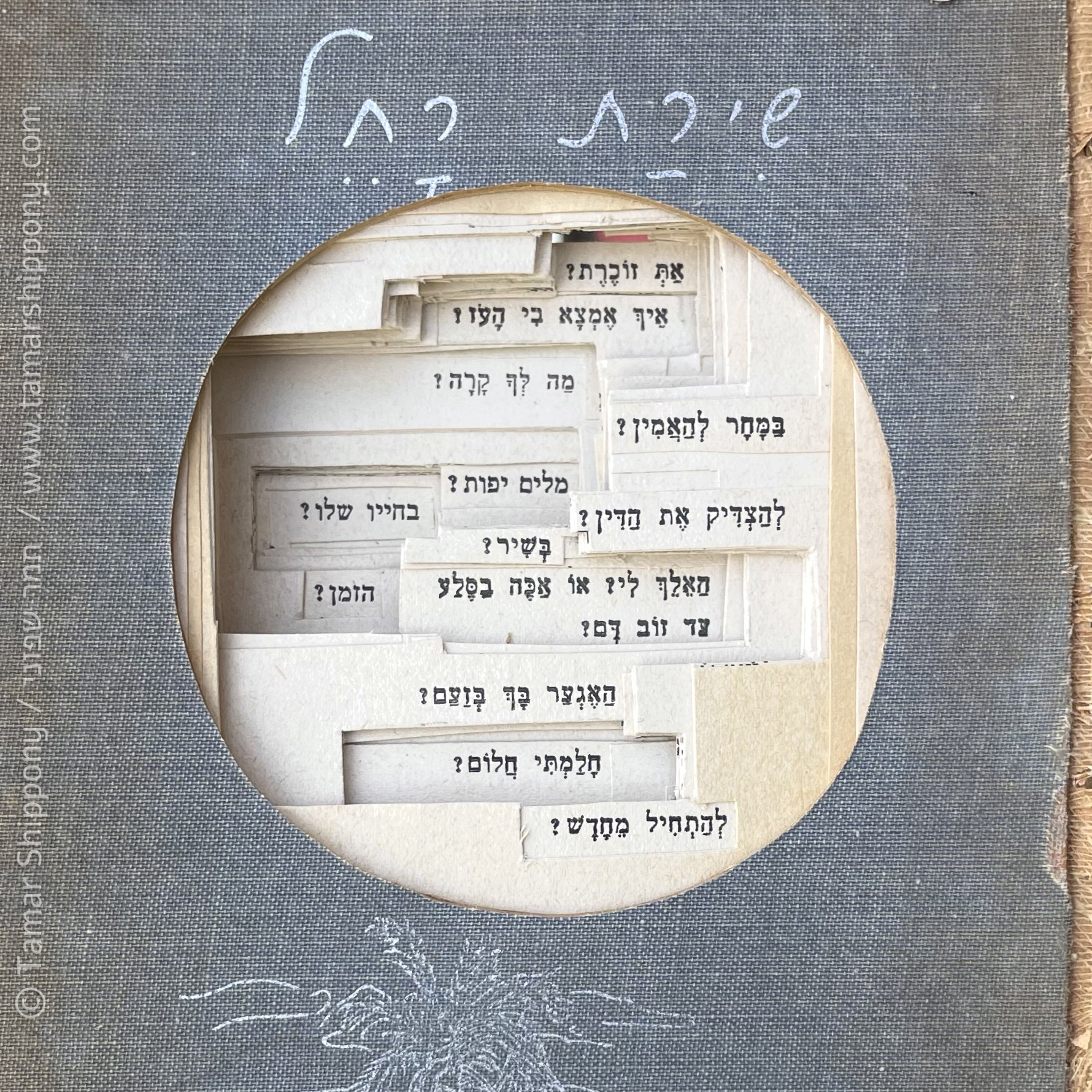
Quest-ion is an intervention into a poetry book by Rachel Bluwstein (size 5.3 inches by 7 inches), known as the Poet Rachel, who was the aunt of my grandfather. My relationship to her is therefore both artistic and familial, and I wanted to create a dialogue with her across time.
As I read the book, I became fascinated by how many questions Rachel asks in her poems. I counted 83 questions—intimate, existential and deeply human. I began cutting into the book, physically opening it around 14 of these questions and bringing them to the surface.
The circular opening became important to me. I thought of it as a womb: a space where something is held, develops and can come into being. Rachel never had children, and so I began thinking of this opening as a “womb of questions”—a place where questions themselves can gestate.
This also led me to think about the Hebrew word rechem, womb, and the idea of what is carried within it—something that has not yet come into being. We are continually “pregnant” with questions; they accompany us into the future and shape what we will do tomorrow. There is also, for me, a poetic connection between rechem (womb) and machar (tomorrow) which share the same letters: the womb is a place where something of tomorrow is carried toward becoming.
The work is therefore a conversation between two women separated by generations, between text and material, and between questions and what may eventually emerge from them. By cutting into the book, I am not destroying it but entering it—making a physical space for the questions that were already there and allowing them to continue asking themselves.
The 14 questions I chose to reveal include: “Do you remember?” “How will I find the courage within?” “What happened to you?” “Should I believe in tomorrow?” “Should I walk away? Or strike the rock until it bleeds?” “Did I dream a dream?” and “Should I start over?”
View this post on Instagram